

The Oriire Children Are Home. The Work Isn’t Over.
39 students and 7 teachers taken from Oriire, Oyo State came home on July 10, after 56 days in the forest. One did not: Michael Oyedokun, killed two days into the ordeal. The rescue is done. What these children need next is just beginning.
We wrote about 39 students and seven teachers taken from three schools in Oriire, Oyo State. The youngest was two.
On July 10, they came home.
We want to sit with that first, before anything else.Forty-four pupils and teachers walked out of the forest alive. A mother in Ahoro-Esiele got her child back. A principal, Mrs. Alamu Folawe, stood in front of a camera and thanked the people who fought to bring them home. That is not a small thing. For 56 days, nobody could promise these families that sentence would ever be true. Now it is.
What it took to get here.
This didn’t happen by accident, and it didn’t happen quickly. The Nigerian Army’s 2 Division, working with the DSS, police, NIA, and local vigilantes, spent over a month identifying the network behind the abduction, tracking their hideouts through the Old Oyo National Park forest, and dismantling their logistics before moving. Eight suspects are now in custody. The operation that ended this crisis was slow, deliberate, and, in the end, it worked.
We said this was a child health emergency, not just a security matter. We still believe that. But we also believe in naming it clearly when the people responsible for security do their job well. Credit belongs to the men and women who spent 56 days in a forest looking for other people’s children. We don’t say that often enough in this country.
We should also name the grief this rescue doesn’t undo. Michael Oyedokun, a mathematics teacher at Community Grammar School, was killed by his captors two days into the ordeal. He does not get to come home. His family carries this outcome permanently, inside a story the rest of the country will file under “resolved.” It isn’t, for them. It shouldn’t be, for us either.
The part after the cameras leave.
Rescue is the beginning of a different kind of work, not the end of this one. Forty-four children and teachers spent nearly two months in captivity. Some of them are two, three, four years old. What they need now isn’t a headline, it’s time, quiet, and real trauma care, sustained past the point where this stops being news.
That is the piece we should be watching closely. Not whether the government can mobilize a rescue under pressure, it just proved it can, but whether it will fund and follow through on what these children need over the next year, not the next news cycle.
What we’re asking now.
We asked for three things: bring them home, protect schools as sacred ground, and remember the children after the cameras leave. One of those three is done. Two are still open questions. Oyo’s government has said it won’t be the last community to face this. Schools across the state, and across the country, still don’t have the physical security or rapid-response protocols this moment proved are necessary. That work has to start now, while the urgency is still fresh, not after the next abduction reminds everyone why it mattered. A child’s safety shouldn’t depend on how much national attention their community can generate. That’s the standard worth holding onto now that the cameras are moving on. We’re grateful these 44 are home. The next child shouldn’t have to leave in the first place.
Share this story
More stories you might like
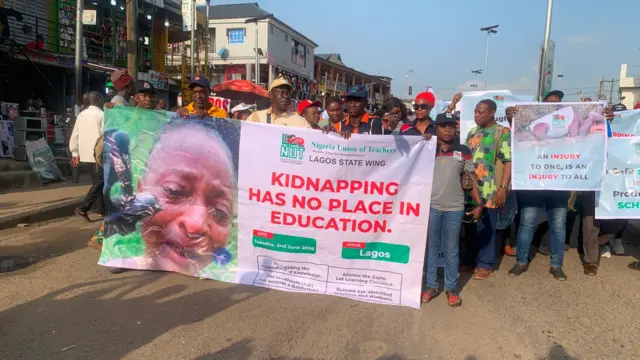
39 Students. 7 Teachers. Still Not Home.
On May 15, 2026, armed bandits abducted 39 students and 7 teachers from three schools in Oyo State. The youngest was two years old. Little Lives Foundation cannot stay silent.

You don't need to be rich to save a life: how ₦2,000 or ₦5,000 goes further than you think
When we told a father what had come in for his child's care, he said the money was a whole lot. It was ₦180,000. Here's the arithmetic behind that.

Growing Strong Minds: Why Kids Need Mental Health Support
If you grew up in a Nigerian home, you probably know the phrase: stop crying or I’ll give you something to cry about. Here’s why that habit is quietly shaping a generation, and four simple ways to break it.
By Ogbonna Precious